
Low back disorders are the most common injuries affecting more than one in five people at some point in their lives.
The associated pain can vary from a mild nagging to an extreme crippling pain. There are many causes and all tend to be quite complex and difficult to treat. The most common is the lumbar strain often affecting athletes. Caused by microtears of the muscles and ligaments, it accounts for 70 to 75% of all back problems but is usually the easiest to treat.
Facet joint syndrome accounts for 10 to 15% of back problems and is caused by excessive twisting or arching of the back. The vertebrae in your back are connected by facet joints. These joints when strained under extreme forces can cause inflammation in the surrounding tissue. The pain may persist for a long time as the facet joints are often re-irritated.
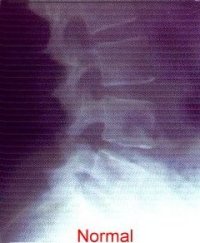
Phase 1 Degeneration
Herniated disc or “slipped disc” is usually the most severe accounting for 5 to 10% of the low back disorders. The disc is a soft jelly-like material that acts as a shock absorber between the vertebrae. The center of the disc is still softer and can squeeze out pressing and pinching the nerves resulting in sciatic pain. This pain can shoot right down to the foot in severe cases.
Degenerated disc usually occurs in people over 40 even without specific injury. Various types of arthritis can spur on disc degeneration. The discs lose moisture and tend to shrink and cause facet joints to settle closer together. This causes pinching and irritation of the surrounding nerves.
Phase 2 Degeneration
Sciatica is the common type of low back pain that radiates down the leg. It usually results from herniated disc when the jelly-like material between the vertebrae bulges out and pushes on a spinal nerve. Sciatica can also result from spinal stenosis when the canal containing the spinal cord narrows, also putting pressure on the spinal nerve.
Piriformis Syndrome is often misdiagnosed because it can mimic other conditions such as disc herniations. The piriformis muscle is located in the buttock, underneath the glute muscles. It aids in the external rotation of the hip. The routing of the sciatic nerve differs from person to person. The nerve can split and pass around or through the piriformis muscle. The pain is caused by the piriformis muscle becoming tight and compressing around the sciatic nerve.
Phase 3 Degeneration
Low back pain is often exacerbated by chronic inflammation. If the inflammation can be reduced thus improving blood circulation, the body will have a greater chance in healing itself.
Take the simple approach first before electing surgery or taking NSAIDS.
Reduce inflammation for long-lasting pain relief with drug-free CellStim Therapy.
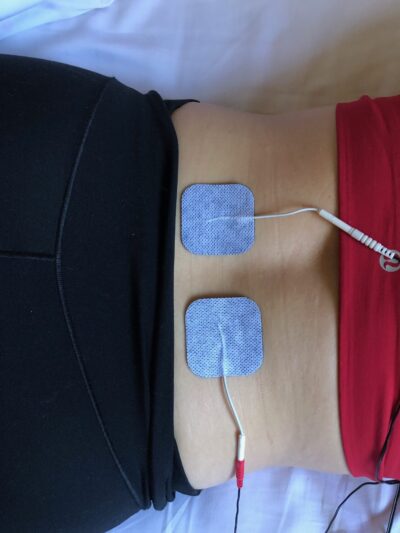
Pad placement effective in reducing source pain arising from injured vertebrae cartilage at L4 and L5